
A quantum research paper could belong in a physics journal, a computer-science publication, an optics journal or an engineering journal. The best destination depends on what the work actually establishes. A proof about quantum error correction, a photonic experiment, a new cryogenic component and a study of strongly correlated matter require different readers and different kinds of review. This guide explains the journals shaping quantum research, what they publish, what authors gain, and how to choose a credible venue without confusing price or prestige with scientific value.
Scientific publication is more than receiving a DOI. It connects a claim to a research community capable of testing it. Editors assess novelty, quality and suitability. Reviewers challenge proofs, methods, experimental calibration, controls, statistical claims and the relationship to previous research. Revision makes the contribution clearer and, frequently, narrower. Published work becomes useful when other researchers can locate it, criticize it, reproduce it and build on it. A journal's brand can increase readership, but it cannot make weak evidence strong.
Quantum science has no single editorial center. Mathematicians working on operator algebras may read different outlets from engineers characterizing superconducting microwave devices. Quantum-information theorists might prioritize logical channels and complexity bounds; condensed-matter physicists care about excitations and phases; photonics laboratories measure sources, losses and nonlinearities. The first step is therefore not to rank journals by impact factor, but to identify the actual community for the manuscript.
The highest-selectivity quantum and physics journals
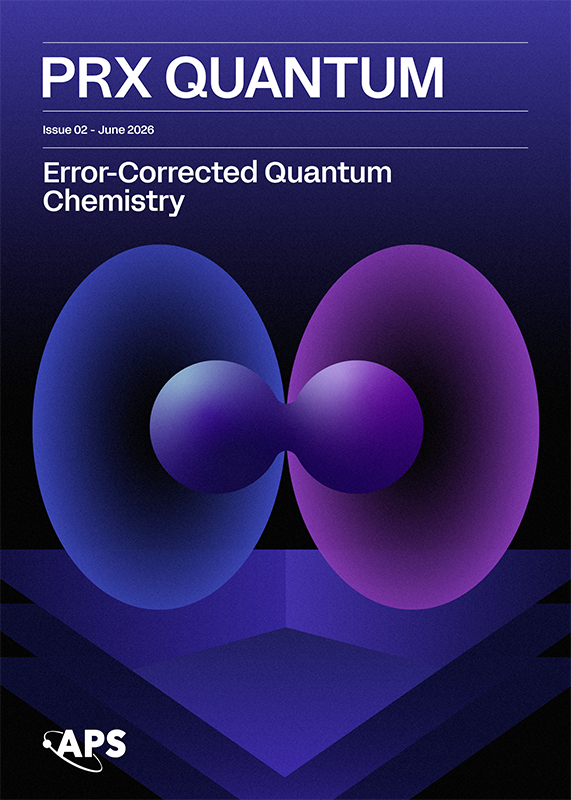
PRX Quantum is among the most visible journals dedicated specifically to quantum information science and technology. Its editors seek work demonstrating an exceptional advance, connection, capability or insight. That may be an important error-correction experiment, a broadly useful quantum-information theorem, a breakthrough hardware technique or an exceptionally general framework. It is fully open access, highly selective and designed for lasting cross-community significance. Its Perspectives and Tutorials serve different purposes from ordinary research manuscripts; authors should check article-type guidance instead of assuming a survey can be submitted as a research paper. Official editorial criteria.
Physical Review Letters (PRL) publishes concise advances of substantial significance across physics. It suits a sharp discovery or general theoretical insight more readily than a long implementation manual. Physical Review X is an exceptionally selective fully open-access journal for major results spanning physics. Both accept quantum research, but their editorial breadth is not identical to a quantum specialist's: a result must have importance beyond merely meeting technical correctness in a niche.
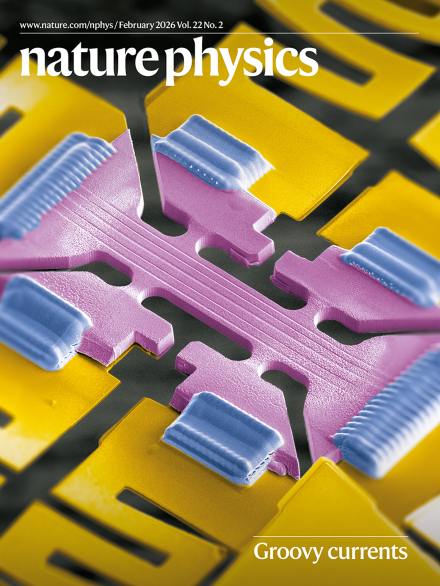
Nature Physics, Nature Photonics and Nature Communications offer different avenues for broadly significant research. Quantum many-body phenomena, unexpected quantum materials or foundational experimental effects may interest Nature Physics. An important photonic interface, quantum network or integrated light source may fit Nature Photonics. Nature Communications serves substantial advances across disciplines with its own editorial expectations. Nature Materials and Nature Nanotechnology become relevant when the main achievement is a material or nanostructure rather than an algorithm. Their peer-review and access policies differ; manuscript fit must be checked individually.
The core quantum-information journals
Quantum is a non-profit, community-oriented, peer-reviewed open-access journal that emphasizes correctness, significance and clarity. It publishes experimental and theoretical quantum research, especially work with real intellectual substance for quantum-information specialists. Its publishing model is unusual: submissions are made via the arXiv identifier of a manuscript posted or cross-listed in quant-ph, and the final accepted manuscript remains integrated with that preprint workflow. For researchers who value wide access and rigorous specialist review, it is an important venue to know. It does not depend on glossy conventional issue covers to be taken seriously. See its author instructions.
npj Quantum Information is a Nature Portfolio journal covering quantum computing, communication, cryptography, sensing, metrology, quantum information theory and experimental technologies. It is a fully open-access journal requiring an article processing charge after acceptance, potentially covered or waived under specific arrangements. A substantive quantum-algorithm paper, novel quantum-network protocol or well-validated quantum error-correction study may be relevant if it satisfies the journal's editorial standard. Its aims and scope provide the most reliable fit test.
Quantum Science and Technology (QST) brings together computing, control, communication, sensing, devices and engineering. It seeks articles with lasting importance within a subfield and relevance to quantum technologies more broadly; the publisher explicitly describes it as highly selective. It is particularly interesting for research in which device physics and system-level capability are closely connected. Its hybrid model offers free-to-author subscription publication and optional paid immediate open access. Publisher's scope and publication-policy page.

Physical Review A remains a central specialist home for atomic, molecular and optical physics, quantum information, quantum optics, and fundamental questions about states, dynamics and measurement. It may be a far better destination for a detailed quantum-channel analysis or well-supported AMO result than a more broadly selective journal that requires an unusually sweeping claim. Physical Review Research is fully open access and reaches across physics; New Journal of Physics is another broad, peer-reviewed, fully open-access outlet for strong theoretical and experimental work.
Where quantum hardware and engineering are published
A rigorous hardware contribution is not judged by the same criteria as a theorem. A novel photonic chip, an improved readout chain or a cryogenic component needs measured performance, reproducible geometry, realistic baselines and an account of limitations. Physical Review Applied welcomes applied science grounded in physical insight. IEEE Transactions on Quantum Engineering focuses on quantum engineering, including devices, software, hardware, communication, metrology and control systems. AVS Quantum Science serves research in quantum materials, devices, instrumentation and technology as well as topical reviews. These titles may reach the engineers best positioned to reproduce a component's capabilities.

Related venues deserve attention according to the technical contribution. Materials for Quantum Technology concentrates on materials enabling quantum hardware. Journal of Physics B focuses on atomic, molecular and optical physics. Optica, Photonics Research, ACS Photonics and Nature Photonics may be appropriate when optical physics is the main breakthrough. Publishing a useful quantum transducer does not require claiming a complete quantum network or fault-tolerant computer. A thorough, credible device paper can make its strongest contribution through its engineering precision.
Quantum algorithms, foundations, mathematical physics and materials
Quantum Information Processing and International Journal of Quantum Information offer specialist outlets for information processing, algorithms, architectures, foundations and related methods. ACM Transactions on Quantum Computing and carefully selected computer-science conferences can matter greatly for work whose main claim concerns algorithms, computational complexity or software correctness. Journal and conference cultures in computer science are not identical, so an author should read the relevant publication rules before submitting.

Journal of Mathematical Physics, Communications in Mathematical Physics and Annales Henri Poincaré reward rigorous mathematical-physics results. A strong theorem about operator algebras or quantum systems may find more knowledgeable reviewers there than in a general computing venue. Physical Review B, 2D Materials and Nature Physics are important for quantum materials, many-body excitations, topology and condensed matter. The question is always what is actually new: a mathematical result, a physically observable effect, or a demonstrated device.
What do journals give authors?
The most important benefit of an appropriate journal is informed peer review. A reviewer who understands the field can find missing assumptions, challenge a comparison, request an essential control or point to prior work the authors missed. A careful editorial process can make an article more reliable and more useful. Journal publication also provides stable bibliographic metadata and a citable version of record, often with a DOI. Discovery through journal indexing and specialized readership can help a paper reach laboratories and theorists who can build on it. Some publishers offer highlights, accessible summaries, news coverage or editorial features, but media attention is not promised and should not be the primary objective.
The real benefit is durable participation in a scientific conversation. A published decoder implementation that becomes a baseline for other researchers, a theorem reused in later arguments, or a component design reproduced by another laboratory has tangible influence. Impact factors measure aggregate journal citation patterns, not whether one manuscript's results are correct. A paper can be rigorous and valuable without appearing in the broadest possible journal.
Comparing journals by fit rather than prestige alone
Use the table as a first reading map, not as a ranking of scientific worth. “OA” means open access to readers. “Hybrid” means a subscription publication option exists alongside an optional paid open-access route. Policies change, and journal names alone cannot determine the chances of acceptance.
| Venue | Typical fit | Access route |
|---|---|---|
| PRX Quantum | Exceptional advances across QIS | Fully OA, APC |
| Physical Review Letters | Concise physics discovery | Hybrid |
| Physical Review X | Major broad physics result | Fully OA, APC |
| Quantum | Significant rigorous quantum science | OA, fee-waiver options |
| npj Quantum Information | Quantum information and technology | Fully OA, APC |
| Quantum Science and Technology | Broadly relevant technology and systems | Hybrid |
| Physical Review A | Quantum information and AMO physics | Hybrid |
| Physical Review Applied | Validated devices and applications | Hybrid |
| IEEE Transactions on Quantum Engineering | Hardware/software engineering | Fully OA, APC |
| Quantum Information Processing | Methods, protocols and algorithms | Hybrid |
| New Journal of Physics | General high-quality physics | Fully OA, APC |
| Nature Photonics | Important quantum-optical results | Check journal policy |
How much does it cost to publish?
A fee to submit a paper is not the same as a charge to publish an accepted paper openly. Some reputable hybrid journals have no author publication fee under their traditional subscription route. Fully open-access journals frequently charge an article processing charge (APC) once a manuscript is accepted. University agreements, sponsor funding and waivers can reduce or eliminate an author's actual bill. A higher price does not establish higher scientific quality.
The following examples are taken from publisher policies available in October 2026. APS lists $3,590 for open-access publication in PRX Quantum and $4,140 for the optional gold-OA route in Physical Review Letters. Quantum lists a regular contribution of €600, a reduced option of €100 and a full fee waiver without a required hardship justification. IOP lists $4,295 for optional gold OA in Quantum Science and Technology but explicitly allows subscription publication at no charge. [1][2][3]
npj Quantum Information lists $4,390 for original research, subject to waiver or institutional arrangements. IEEE Transactions on Quantum Engineering lists $1,995 and New Journal of Physics lists $2,875. These are snapshots, not price quotes. Check fees, taxes, institutional arrangements and waivers on the publisher's own site when submitting. An author with no research budget should not assume that the only path to credible peer review involves paying thousands of dollars. [4][5][6]
Other specialist and accessible outlets worth evaluating
The quantum literature is larger than the journals with the most recognizable mastheads. EPJ Quantum Technology publishes quantum technology research under an open-access model, with the publication charge and funding options set by the publisher. Quantum Reports covers quantum science broadly, publishes research and reviews, and lists an open-access APC. Scientific Reports is a broad scientific journal that emphasizes technically sound research within scope rather than requiring the same exceptional general-interest advance as the most selective Nature titles. These venues are not interchangeable, and the fact that one has broader editorial criteria does not establish that a particular manuscript will be accepted.
Another distinction matters for survey articles. Reviews of Modern Physics and Nature Reviews Physics specialize in influential syntheses rather than ordinary first reports of small research projects. Reviews and tutorials at many journals are commissioned, invited, or subject to pre-submission editorial approval. A manuscript that introduces genuinely new proofs or measurements should usually be developed as original research; an educational exposition for a community website is valuable for different reasons but is not thereby a peer-reviewed research paper.
Independent researchers may find that a strong specialist journal offers the most constructive refereeing for their work. Before deciding, read recently published articles in the proposed venue, confirm its indexing and ownership, look up its editorial board, identify whether submissions are handled by experienced specialists, and determine whether article fees or waivers are clearly stated. The goal is an honest and consequential scholarly record, not the weakest possible gate to acquire a publication count.
What about arXiv, preprints and independent researchers?
arXiv is a preprint repository, not a peer-reviewed journal. Posting a manuscript can make results discoverable, timestamped and citable before journal publication, subject to its endorsement and moderation rules. It does not imply that referees have checked the claims. Authors should respect the target journal's policies on preprints and simultaneous submission. Quantum explicitly requests an arXiv manuscript in quant-ph or cross-listed there, while most other venues use their own submission systems.
Research does not need to originate within a famous university to deserve scrutiny. Independent and student researchers can contribute scientifically meaningful work, but the manuscript must establish its own reliability. Mathematical work needs explicit assumptions and correct proofs. Numerical work needs accessible code, baselines and uncertainty. Experimental work needs calibration, reproducible methods and evidence distinguishing measurement from expectation. Corresponding-author requirements, coauthor approval, ethics and institutional fee coverage should also be handled carefully.
A practical submission strategy
Begin with one sentence stating the central contribution. Read several recent papers that a candidate journal actually accepted: do they solve similar kinds of problems at a comparable level of depth? Check scope, article type, access policy, length, data availability and formatting. Then prepare an abstract that separates question, method, validated result and significance. Submit with a focused cover letter showing why the journal's readers would care. When reviewers reply, address each substantive criticism, explain changes and revise claims where justified.
Not every rejection is an indictment of the work. Editorial fit and breadth matter, and a detailed technical result can be better received by a specialist journal than by a general publication seeking a single dramatic discovery. Conversely, journals with weaker barriers to acceptance do not automatically provide more useful feedback. Look for transparent peer-review policy, qualified editors, legitimate indexing, clear costs and published research that specialists genuinely read. Be cautious of journals offering guaranteed acceptance or concealing fees behind impressive-sounding titles.
For an error-correction theory paper, the starting reading list might include Quantum, Physical Review A, npj Quantum Information and PRX Quantum, depending on its importance and audience. For a photonic engineering demonstration, consider Physical Review Applied, IEEE Transactions on Quantum Engineering, Quantum Science and Technology and relevant optics outlets. For quantum many-body physics, Physical Review B or Nature Physics might be more natural. The goal is not to accumulate the most prestigious labels. It is to place work where the right researchers can test and use it.
Author resources and official policies
[1] APS — 2026 open-access APC list.
[2] Quantum — author contributions and full waiver option; submission guide.
[3] IOP — Quantum Science and Technology, scope and charges.
[4] npj Quantum Information — article processing charges.
[5] IEEE Transactions on Quantum Engineering — submission and fees.
[6] IOP — New Journal of Physics, scope and fees.
[7] PRX Quantum — aims and editorial criteria.
[8] npj Quantum Information — aims and scope.
[9] APS — current journal portfolio.
[10] arXiv — submission help.
Journal cover imagery is credited to each publisher. Publication models and fees are as listed by the respective publishers in October 2026 and may change.